

A roof leak should be treated as an active water intrusion, even if the drip seems small. The first priorities are to protect people, limit interior damage, and identify whether water is still entering the building.
What should you do first after finding a leak?
Move furniture, electronics, rugs, and other belongings away from the affected area. Place a bucket or other stable container beneath the drip, and use towels to control splashing and protect flooring.
If water is near a light fixture, outlet, appliance, or electrical panel, avoid touching the area. Shut off power to the affected circuit only if the electrical panel can be reached safely without stepping through water. If there is standing water near electrical equipment, leave the area and arrange for qualified assistance.
Look above the visible stain or drip, but do not assume the roof opening is directly overhead. Water can travel along roof sheathing, rafters, insulation, plumbing pipes, and wall cavities before appearing indoors.
How can you tell whether the leak is still active?
A continuing drip, spreading ceiling stain, damp insulation, or fresh moisture around a roof penetration suggests that water is still entering or has not yet drained from the roof assembly.
Check the area during and after rainfall if it can be done safely from inside the attic or upper floor. A flashlight can help reveal darkened wood, wet insulation, water trails, or shiny surfaces. Do not walk on attic joists covered by insulation, and never step on the underside of the roof deck.
A ceiling that is bulging or sagging may contain trapped water. Keep people away from the area. Puncturing the ceiling can release water suddenly and may expose someone to falling drywall or electrical hazards, so it should not be attempted unless a qualified person determines that it is safe.
Is it safe to inspect the roof from outside?
Roof inspection is safest from the ground. Look for missing or displaced shingles, damaged flashing, exposed underlayment, clogged valleys, lifted metal edges, and debris around chimneys, vents, or skylights.
Climbing onto a wet, icy, steep, or snow-covered roof creates a serious fall risk. Conditions in Chittenango can shift quickly during rain, freezing weather, and winter snow. A roof that appears manageable from the ground may be slippery because of frost, moss, algae, or thin ice.
Binoculars or a camera with a zoom feature can provide useful information without requiring anyone to climb. Do not use a ladder during high winds, on frozen ground, or where overhead wires create a hazard.
What common sources cause roof leaks?
Water entry often occurs at roof details rather than in the middle of an intact shingle field. Common sources include:
- Damaged, missing, or aging shingles
- Loose or corroded flashing around chimneys, walls, vents, and skylights
- Failed pipe boots or vent seals
- Clogged gutters or downspouts
- Ice dams along the eaves
- Wind-driven rain entering beneath shingle edges
- Deteriorated sealant around roof penetrations
- Condensation caused by poor attic ventilation or warm, moist air entering the attic
- Tree limbs, fallen branches, or debris that damage the roof surface
The visible stain may not identify the exact source. For example, a leak near a chimney can be caused by flashing several feet higher on the roof, while a stain near an exterior wall may originate at a roof-to-wall connection.
What should you do if the leak happens during winter?
During snow or freezing weather, avoid climbing onto the roof or attempting to remove ice with sharp tools. Chipping ice can damage shingles, flashing, gutters, and membrane materials. It can also create falling ice hazards around entrances and walkways.
If an ice dam is suspected, reduce indoor moisture by using bathroom fans, kitchen ventilation, and a dehumidifier where appropriate. Keep attic access panels closed, and check that warm air is not escaping around recessed lights, ducts, plumbing openings, or the attic hatch.
Snow removal from a roof can also be hazardous. Heavy snow may add significant weight, especially when combined with ice or saturated insulation. Any removal should be evaluated carefully, with attention to falling snow, ladder stability, roof pitch, and structural safety.
Can a temporary repair stop the leak?
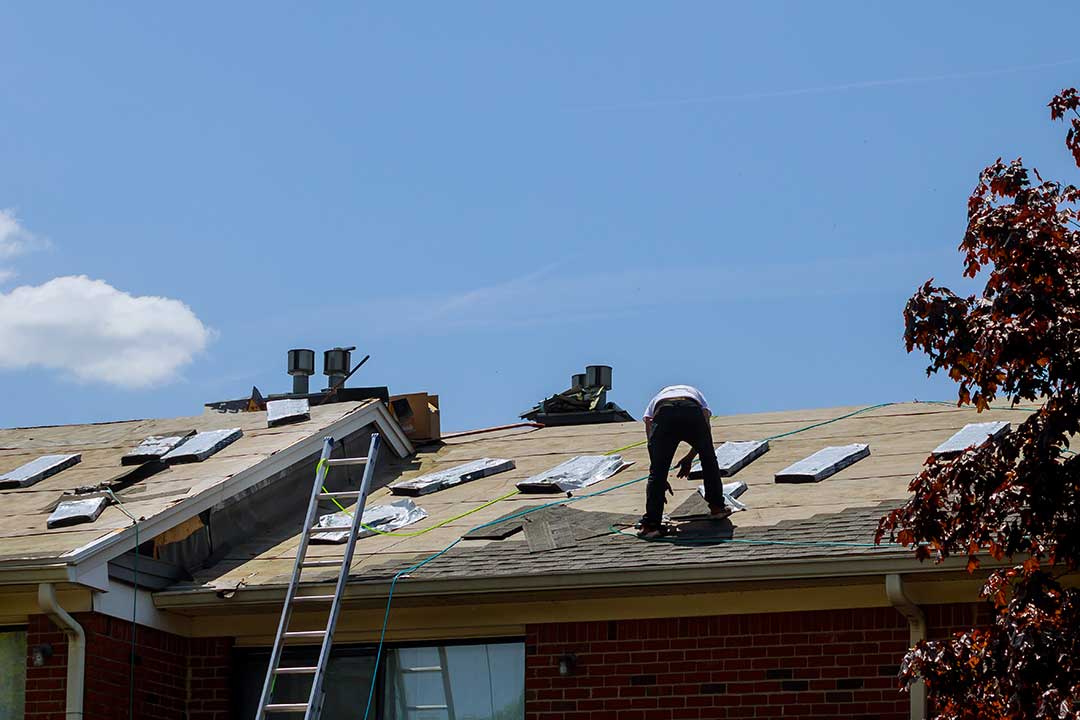
Temporary measures can limit damage, but they are not a substitute for finding the entry point and correcting the underlying problem. A tarp may help cover an exposed section of roof if it can be installed without climbing or working in unsafe conditions. It must be secured so wind does not turn it into a hazard.
Do not rely on indoor caulk, expanding foam, duct tape, or roofing cement spread randomly over the visible ceiling stain. These materials may hide the symptom while allowing water to continue moving through the roof assembly.
If the leak began after wind, a fallen branch, or a severe storm, photograph the interior damage and the visible exterior condition from a safe location. Keep notes about when the leak occurred, how long it continued, and whether it followed rain, snowmelt, or a temperature change.
When does a leak require urgent attention?
Prompt action is warranted when water is entering near electrical components, the ceiling is sagging, insulation is saturated, water is spreading rapidly, or a large section of roof has been damaged.
Urgent attention is also appropriate after a tree impact, major wind event, or structural movement. A roof opening can allow additional water into wall cavities and insulation even after the visible dripping stops.
Mold does not necessarily appear immediately. Damp drywall, wood, and insulation can support microbial growth if they remain wet. Drying should begin as soon as conditions are safe, but materials that are heavily saturated, contaminated, or structurally weakened may need careful evaluation before removal.
How should the leak be documented?
Take clear photographs of:
- The ceiling stain, dripping area, and any sagging
- Wet walls, flooring, insulation, or personal property
- Exterior damage visible from the ground
- The date and approximate time of the leak
- Weather conditions, including rain, wind, snow, or rapid thawing
Documentation helps distinguish a sudden storm-related event from a long-term maintenance issue. It can also show whether the damage is expanding after the original incident.
Avoid making permanent repairs before the source and extent of damage are understood. Temporary protection and drying are usually reasonable, but covering evidence or removing damaged materials too quickly can make the cause harder to determine.
What if the leak stops on its own?
A stopped leak still deserves attention. Water may stop because rainfall ended, snow temporarily refroze, wind direction changed, or an ice dam shifted. The roof may remain vulnerable during the next storm.
Inspect accessible attic areas for damp wood, compressed insulation, rusted fasteners, water trails, or daylight visible through the roof deck. Also check gutters and downspouts after leaves or winter debris accumulate. In older homes and houses with multiple roof additions, valleys and roof-to-wall intersections deserve particular attention because they have more joints where water can enter.
The safest response is simple: contain the water, protect electrical systems and belongings, avoid unsafe roof access, document the damage, and treat the source—not just the ceiling stain—as the problem that needs to be understood.
