
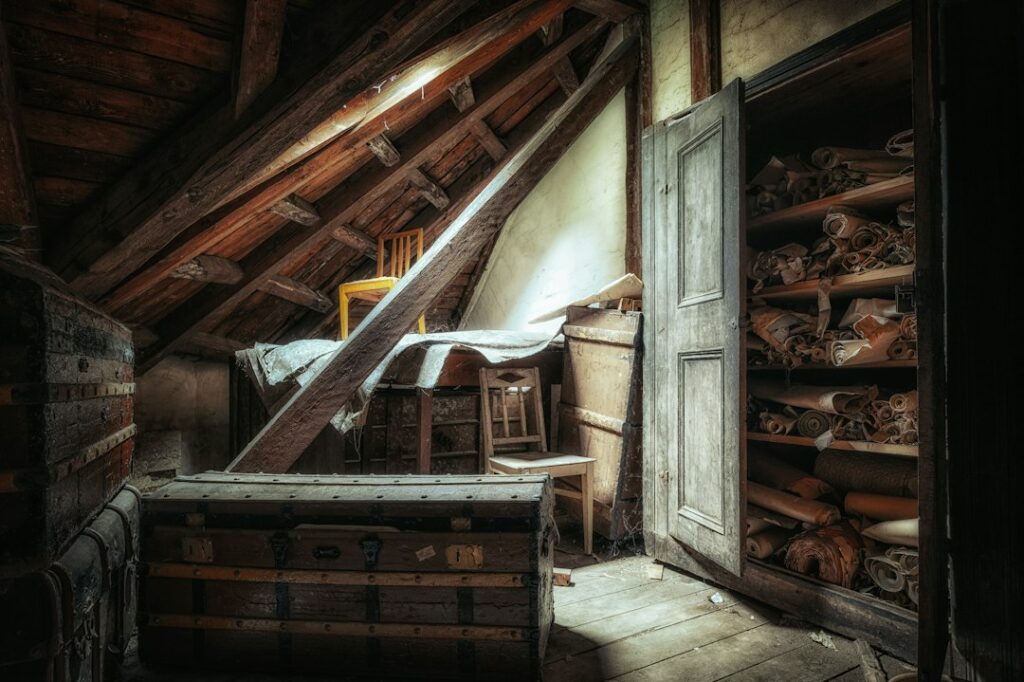
Holiday decorations are easiest on a roof when they are stored somewhere dry, stable, and easy to reach from the ground or a finished floor. Poor storage can lead to moisture damage, overloaded attic areas, blocked ventilation, scratched roofing materials, and unnecessary climbing on icy surfaces.
In Chittenango, winter storage decisions matter because snow, freezing temperatures, wind, and repeated thawing can affect both the roof and the spaces beneath it. A little planning after the holidays can help prevent damage before the next decorating season.
Is the attic a safe place to store holiday decorations?
An attic can work for lightweight, clean, dry decorations, but it is not automatically the best storage location. Attics often experience large temperature changes, limited walking space, condensation, and restricted ventilation.
Before using an attic, check these conditions:
- Store items away from roof sheathing, eaves, soffit vents, and ridge or gable vents.
- Keep boxes off areas where they could block airflow or press against insulation.
- Avoid placing heavy containers between roof trusses unless the flooring was designed for storage.
- Do not lean decorations against rafters, roof decking, plumbing vents, or electrical wiring.
- Leave access to electrical junctions, exhaust fans, and other equipment.
- Use sealed containers if the attic has a history of dust, insects, or moisture.
Holiday decorations can be surprisingly heavy when packed together. Ceramic pieces, glass ornaments, artificial trees, metal yard decorations, and multiple light strands should not be concentrated in one small attic area. Spread weight across approved flooring or use a lower storage area instead.
Why should decorations stay away from roof vents?
Roof vents need clear airflow to help manage heat and moisture in the attic. Covering or crowding them with boxes can reduce ventilation and contribute to condensation, frost, damp insulation, and wood moisture problems.
A common mistake is storing large seasonal items near the edges of the attic because those spaces appear unused. Unfortunately, the areas near the eaves often contain soffit ventilation paths. Bags, wrapping paper, artificial greenery, and cardboard can shift into these openings over time.
Keep a visible clearance around every vent. Do not use loose plastic sheets, blankets, or storage bags as a way to cover exposed roof areas from the inside. If the roof deck has staining, dampness, frost, or a musty odor, move stored items away from the area and investigate the source before packing more materials nearby.
Can holiday lights damage shingles or gutters?
Holiday lights do not usually damage a roof when they are attached with suitable clips and removed carefully. Damage is more likely when fasteners are driven into roofing materials, cords are trapped under shingles, or decorations are pulled loose by wind or ice.
For future installations:
- Use clips made for the intended surface rather than nails, staples, or screws.
- Never puncture shingles, flashing, soffits, or fascia to hold a light strand.
- Keep cords away from sharp metal edges and areas where ice may form.
- Do not place heavy decorations on gutters or downspouts.
- Remove lights by releasing the clips instead of pulling the strand from one end.
- Avoid installing decorations over loose, brittle, curled, or damaged shingles.
If lights were attached directly to the roof with penetrating fasteners, the holes may allow water to enter even if no leak is visible yet. Water can travel along roof decking before appearing as a ceiling stain.
Where should larger decorations be stored?
Large decorations should generally be stored on a level surface that can support their weight without making the roof or attic structure part of the storage system. A dry basement, interior closet, utility area, or properly ventilated garage may be more suitable than an attic.
Keep containers elevated from concrete floors, especially where spring thaw or heavy rain could create damp conditions. Shelving helps protect boxes from water and makes it easier to inspect for leaks.
Artificial trees should be completely dry before storage. If a tree was placed outdoors or exposed to wet snow, allow it to dry fully before covering it. Moisture trapped inside a storage bag can create mildew and unpleasant odors that may spread to nearby materials.

For wreaths, garlands, and fabric decorations, avoid tightly compressing them while damp. Use breathable containers when possible, and do not store them directly against exterior walls that may become cold and damp.
How can stored decorations be protected from leaks?
Storage should never hide evidence of a roof problem. Use containers that make it possible to notice moisture rather than relying entirely on opaque cardboard boxes.
Helpful precautions include:
- Keep boxes several inches away from exterior walls and roof edges.
- Avoid stacking items directly beneath valleys, roof penetrations, or areas with a history of staining.
- Inspect the underside of the roof deck after major storms if the attic is safely accessible.
- Look for water marks, rusted fasteners, peeling paint, damp insulation, or compressed wet insulation.
- Do not store irreplaceable decorations beneath a known leak until repairs are complete.
- Replace soft, collapsed, or water-damaged boxes instead of stacking them higher.
A roof leak may only occur during wind-driven rain or during a freeze-and-thaw cycle. The absence of a visible stain does not always mean the storage area is dry.
Should holiday decorations be left on the roof over winter?
Decorations should not be left on the roof longer than necessary, particularly after snow or ice begins accumulating. Inflatable decorations, lighted figures, and weighted ornaments can catch wind, hold moisture, or shift against roofing materials.
Snow and ice also create safety problems. Even a lightweight object can become difficult to remove safely when frozen in place. In areas with regular winter storms, roof valleys, lower roof sections, and areas near dormers or other projections may collect deeper snow than open roof surfaces.
Never climb onto an icy or snow-covered roof to retrieve decorations. A roof rake used from the ground may be appropriate for limited snow removal, but it should not be used to drag frozen decorations across shingles. If an object is stuck, falling, or near electrical wiring, the safest choice may be to leave it in place until conditions improve or obtain qualified assistance for the hazardous task.
What should be done before storing decorations?
A short inspection can prevent small problems from becoming next season’s repairs. Before putting decorations away:
1. Remove dirt, leaves, and moisture from each item.
2. Check light cords for cracked insulation, loose sockets, or damaged plugs.
3. Separate broken glass and sharp metal pieces from reusable decorations.
4. Label containers by room or type so they are not dragged across the attic floor later.
5. Place heavier items on lower shelves or stable flooring.
6. Keep walkways, attic access points, vents, and electrical equipment clear.
7. Inspect the roofline from the ground for missing decorations, loose gutters, damaged flashing, or visible shingle changes.
The most roof-friendly storage system is one that keeps weight controlled, airflow open, moisture visible, and retrieval simple. In a winter climate, avoiding unnecessary roof access is just as valuable as choosing the right container.
